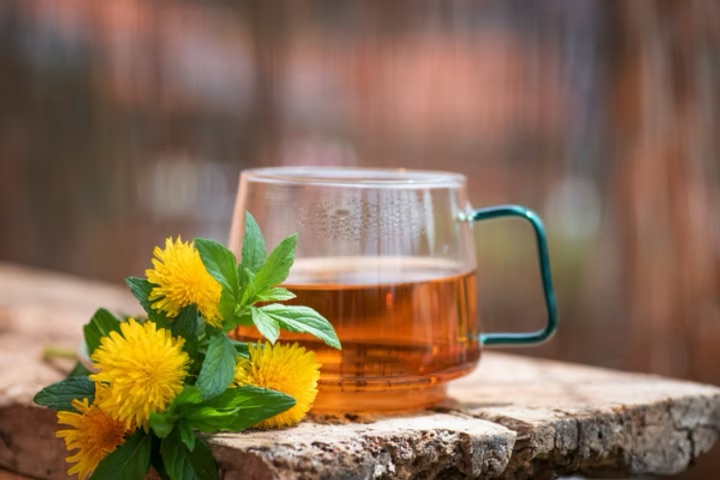
Herbal Teas for Hormone Balance: 7 Botanicals That Support Your Hormonal Health
7/13/26
< view all posts
Hormones are the body’s messengers — quietly orchestrating everything from your energy and mood to your metabolism, sleep, and reproductive health. When they’re in balance, you feel it. When they’re not, you feel that too.
Fatigue that doesn’t lift. Cycles that are irregular or painful. Weight that won’t budge no matter what you do. Mood swings that feel disproportionate. Brain fog. Sleep that never quite restores.
These are the signals of a body asking for support — and for centuries, long before synthetic hormones and pharmaceuticals existed, women found that support in plants.
In this post, we’re exploring seven of the most powerful botanicals for hormone balance, how they work, and how to incorporate them into your daily routine through the simple, ancient ritual of drinking tea.
Why Herbs for Hormone Support?
Hormonal imbalance rarely has a single cause. It’s usually the result of accumulated stressors — chronic stress, nutritional deficiencies, environmental toxin exposure, poor sleep, gut dysfunction, and more — all converging to disrupt the delicate feedback loops that keep your hormones in rhythm.
Pharmaceutical hormone therapy can be appropriate in certain situations, but for many women, the goal isn’t replacement — it’s restoration. Supporting the body’s own ability to produce, regulate, and clear hormones naturally.
That’s where herbs come in. Many botanical medicines contain compounds that interact directly with hormone receptors, support the organs responsible for hormone metabolism (particularly the liver and adrenals), and calm the nervous system stress that drives so much hormonal disruption in the first place.
Here are seven herbs worth knowing — all of which are available in Sarah’s handcrafted blends and loose leaf apothecary at Sacred Roots.
1. Raspberry Leaf
Rubus idaeus
Raspberry leaf is one of the most beloved women’s health herbs in traditional botanical medicine — and for good reason. Rich in fragarine, a plant compound that tones and relaxes the uterine muscles, raspberry leaf supports menstrual regularity, eases cramping, and has long been used as a uterine tonic for women at every life stage.
It’s also deeply nutritive — rich in magnesium, calcium, iron, and B vitamins that support hormonal health from the ground up.
Best for: Menstrual irregularity, cramping, uterine health, general women’s tonic
2. Ashwagandha Root
Withania somnifera
Ashwagandha is an adaptogenic herb — meaning it helps the body adapt to stress and restore balance across multiple systems simultaneously. For hormonal health, its most significant action is on the HPA axis (hypothalamic-pituitary-adrenal axis) — the central command system that governs your stress response and directly influences thyroid and reproductive hormone balance.
Chronic stress keeps cortisol elevated, which suppresses progesterone production and disrupts thyroid function. Ashwagandha helps bring cortisol back into balance — creating the conditions in which other hormones can regulate themselves.
Best for: Stress-driven hormonal imbalance, adrenal fatigue, thyroid support, low progesterone
3. Maca Root
Lepidium meyenii
Maca is a Peruvian root vegetable that has been used for thousands of years to support energy, fertility, and hormonal balance. Unlike phytoestrogenic herbs that mimic estrogen, maca works by nourishing the endocrine system as a whole — supporting the body’s own hormone production rather than substituting for it.
Research has shown maca to be particularly supportive for perimenopausal and menopausal women, helping reduce hot flashes, improve mood, and restore energy and libido.
Best for: Perimenopause, menopause, low libido, energy, fertility support
4. Damiana Leaf
Turnera diffusa
Damiana is a warming, uplifting herb with a long history of use in women’s hormonal health. It supports the nervous system, lifts mood, and is traditionally used to address hormonal-related depression, low libido, and the emotional dimensions of cycle imbalance.
It works particularly well in combination with other nervine and adaptogenic herbs — as part of a broader hormone support protocol rather than in isolation.
Best for: Mood, libido, nervous system support, cycle-related emotional shifts
5. Oat Straw
Avena sativa
Oat straw — the green, unripe tops of the oat plant — is one of the most deeply nourishing herbs for the nervous system. It’s rich in calcium, magnesium, and silica, and is traditionally used to restore and rebuild a depleted, overstressed nervous system.
Since hormonal imbalance is so often driven or worsened by chronic nervous system stress, oat straw works upstream — calming the system that’s disrupting the hormones in the first place. It’s a gentle, slow-acting herb best used consistently over time.
Best for: Nervous system depletion, stress-driven hormonal disruption, adrenal exhaustion
6. Tulsi / Holy Basil
Ocimum tenuiflorum
Tulsi — known as Holy Basil in Ayurvedic medicine — is one of the most revered adaptogenic herbs in the world. It supports cortisol regulation, blood sugar balance, and immune health, all of which have downstream effects on hormonal rhythm.
It’s also a beautiful daily wellness herb — uplifting to the mood, grounding to the nervous system, and deeply supportive of the kind of whole-body balance that allows hormones to regulate themselves.
Best for: Cortisol balance, blood sugar stability, mood, general hormonal wellness
7. Red Clover
Trifolium pratense
Red clover contains isoflavones — plant compounds that have a mild estrogenic effect in the body, making it particularly supportive for women navigating the hormonal shifts of perimenopause and menopause. Research suggests it may help reduce the frequency and intensity of hot flashes, support bone density, and ease the cardiovascular changes associated with declining estrogen.
It’s also a gentle lymphatic herb, supporting the detoxification pathways that clear used hormones from the body — an often-overlooked dimension of hormonal balance.
Best for: Perimenopause, menopause, hot flashes, bone health, lymphatic detox
How to Use These Herbs
The simplest way to incorporate these botanicals into your daily routine is through tea — steeped for a minimum of 10 minutes (and up to 20 for full therapeutic benefit) to draw out the full range of medicinal compounds.
Many of these herbs are available individually as loose leaf botanicals in the Sacred Roots apothecary, or already blended into Sarah’s signature therapeutic formulas — including the Hormone Balance, Menopause & Hormone Transition Support, and Menstrual Cramp Relief blends.
A note of wisdom: herbs work best when used consistently, over time, and as part of a broader approach to wellness. They are not quick fixes — they are allies in the slow, steady work of restoring balance.
A Personalized Approach to Hormone Health
Every woman’s hormonal picture is different. What works beautifully for one person may not be the right fit for another — which is why at Sacred Roots, we never take a one-size-fits-all approach to hormone support.
Through kinesiology muscle testing and ZYTO bioenergetic scanning, Sarah can identify exactly which systems are under stress and which herbs and nutritional supports your body is specifically asking for — taking the guesswork out of your protocol entirely.
Because your body already knows what it needs. Let’s help it tell us.
Sarah Wolfe is the founder of Sacred Roots Naturopathy in Blue Rock, Ohio, where she helps clients uncover the root causes behind their health struggles — not just quiet the symptoms. As a Board Certified Holistic Health Practitioner, Certified Naturopathic Practitioner, and Certified Kinesiologist, Sarah blends time-honored natural wisdom with personalized, whole-body care. She is a proud member of the American Naturopathic Medical Association. When she's not in the office, you'll find her blending teas, tending to what grows, and finding new ways to help her community heal naturally.
Leave a Reply Cancel reply

© 2026 Sacred Roots Naturopathy, Ltd. · All Rights Reserved
Website Created by KENZ
explore
Home
contact
740-960-9447
[email protected]
8680 South River Rd
Blue Rock, Ohio 43720
About
Services
Apothecary
Blog
Contact
The Tea Shop
